Some California Bee History
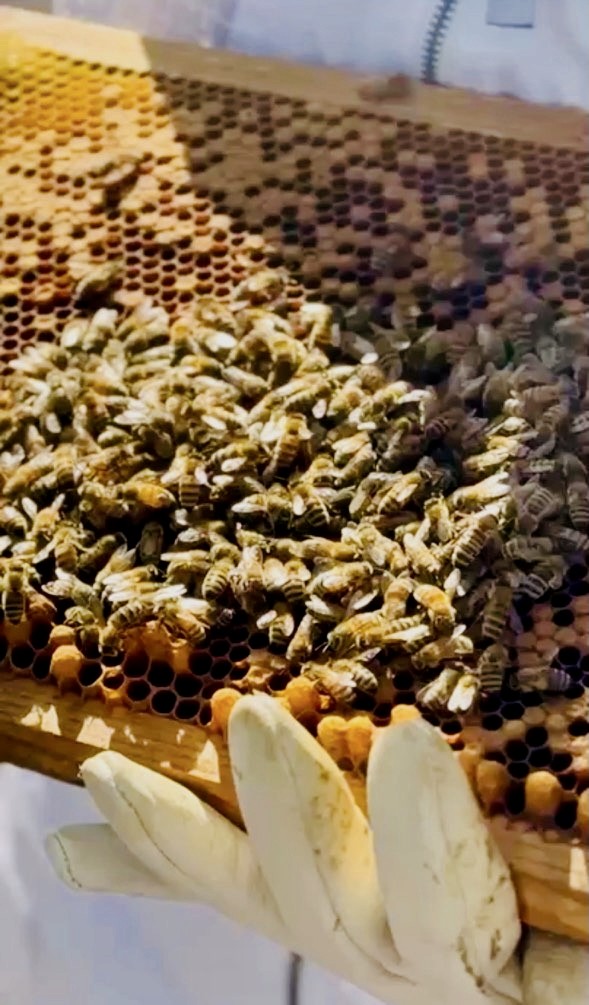
We’d love to share some fascinating information for you to peruse at your leisure about honey bees and pollinators.
Human beekeeping or apiculture (meliponiculture for stingless bees) has been practised for millennia, since at least the times of Ancient Egypt and Ancient Greece. Bees are found on every continent except Antarctica.
All honey bees are non natives in California, meaning they are not originally from this area. They were introduced in 1853 by Christopher Shelton in San Jose who departed from New York with twelve hives of bees and arrived in California with just one. Honeybees are classified by the USDA (United States Department of Agriculture) as livestock. So, truly: welcome to the farm (or should we say, ranch?!)
While honeybees are often most commonly known because they’re the species who produce the honey humans love so much, California has an estimated 1600 native bee species. Most of these native bees are solitary creatures who live in wood or underground tunnels and do not produce honey. They are however still critical to the health of our environment, the continued existence of our wildlands, vital pollinators of crops and serve as an important part of the ecosystem cycle as food that supports a diversity of other species.